Showing posts with label games. Show all posts

Sunday, July 5, 2009

TEAL: Chaos Legions - We Are Many

I've jumped from one Capcom title to another. After finishing off the Maximo series, which included the short, but highly entertaining Army of Zin, I've moved on to the lesser known Chaos Legion (in-between sessions of Frequency). Like a lot of the games I've been playing recently, I'm constantly intrigued by what it does well or different while constantly frustrated by its difficulty.

Side, Story
For better or worse, the story seems very, very disjoined from the actual game. Based on a Tow Ubukata novel, the narrative talks of a classic friends-turn-enemies rivalry that leads to the possible destruction of humanity. I'm not sure how much of the original story is present in the game, but I doubt that the amount of fighting in the game is proportionate to the amount in the book. It's for the better, more action in a action game is a good thing, but when the game does get to the story, it seems segregated.

Save for the main character, the cutscenes have little connection with the levels. So far, the cutscenes seem like they can be strung together without a loss of cohesion, with little of the plot coming through in the actual stages. Unfortunate because it seems like a waste of source material, but ultimately a lesser concern compared to gameplay.

Summoning, Sickness
Starting off, Sieg Warheit seems pretty weak. Even with the most powerful summon on my side (which is lost at the end of the first level), It took a couple of retries to clear just the first level. This is mostly due to the sorry state Sieg starts off in. There's little more to start off with than a single combo and some basic dodges. Save for that single crest, you have a pretty paltry number of choices in dispatching enemies.

As a result, the Legionnaires become, probably by design, my primary mode of attack. Being faster , stronger, and more resilient than Sieg, I find myself sitting back while I send them to do the dirty work. In a way, each Legion makes Sieg more versatile, granting him the abilities that his own move-set sorely lacks. This makes it all the more devastating when you allow a crest to "break", temporarily robbing you of those attacks. The game feels like more of an exploration of commanding power rather than personal power.

Growing, Pains
Being as weak as you are, the beginning of the game was a bit of a hurdle. Two or three untimely assault from the enemy will easily result in a game over, another reason to rely on the Legionnaires rather than yourself. But this initial difficulty is only made worse by the lack of play direction.

The game is a bit of a complicated one, and its mechanics are only presented through various help screens that pop up from time to time. Most of the important stuff is covered in that first stage, but even then basic controls and combat are things that you pretty much have to grep from the manual. Working from the scattered hints means that I've been restarting from experimentation as much as sloppy playing.

The piecemeal tutorial does work when it's presented after activating new crests, which provide, thankfully, new player abilities. With each level comes another crest and another chance to equip a new move that lessens your reliance on your many minions. It's a pattern of growth that I should recognize from many games, namely your Castlevanias and Metroids. Maybe it's the different presentation, the Level-Boss setup as oppose to freeform exploration, or maybe it's the comparably low level that Sieg starts off at, but I found the power-in-parts formula disorienting and different in this context.

German, Gothic
The overall structure, waves of enemies punctuated by end bosses, recalls another overlooked Capcom game that I personally enjoyed, P.N.03. Similarities don't stop there, as the start-up is also a slow climb from the bottom of the power ladder. The difference is in how your character grows. In Chaos Legion, your growth increases the number of moves in your repertoire, changing your character from a one-combo wonder to a versatile fighter. The new moves are definitely welcomed, but it definitely changes how you play from level to level.

As Vanessa Z. Schneider, your power may increase, but your abilities pretty much stay static. Save for the variations on your Energy Drive (super shot), you can move and shoot the same from beginning to end. The only changes come in how upgrades that improve your shot and your shield. This doesn't really change how you proceed through each level, though, just how long it takes you. The shots may be more potent and the damage less debilitating, but the strategy doesn't change. This leads to refinement of play rather than evolution.

Both are fun in their own way. I enjoyed P.N.03 because I felt like I was improving. The game gave you most of the move-set up front, giving me the whole game to become acquainted with it. By the end, I knew the advantages and limitations of Vanessa and felt secure in my abilities. In Chaos Legion, the joy comes from the reward. Ever new ability is a new chance to expand. It's much like a gift, a new toy to play with once you've gotten bored with the older attacks.

Part of each game's enjoyment comes from how each game is constructed. I need to be familiar with the moves of P.N.03, because each level is constructed in a particular way. Without that practice, it would be (and was, in the beginning) a frustrating exercise in unfamiliarity. In Chaos Legion, each wave of enemies is a erratic assault of relentless enemies, an assault that only requires a quick button press and quicker reflexes. Strategy and practice can help, but it's mostly an X-Button affair.

Chaos Legion definitely offers more than I expected. Each death is met with an immediate retry, regardless of how cheap I find the death, just because I need to see what crest I get next or what ability I can buy. The game might be missing a bit, but I imagine that the blanks will be filled in the farther I go.

Sunday, June 28, 2009

TEAL: Maximo - Ghosts (and Glory) of Gaming Past

I've been unintentionally "old school" in my game selection, whether that be in terms of gameplay or style. Nthing has made that more apparent though than my current stint with Maximo: Ghost to Glory. Difficulty-wise, I wouldn't say that it's anywhere near the unforgiving challenge of some of the Ghosts 'n' Goblins games, but it's definitely a lot harder and intriguing than some of the more recent platformers I've played, for a few of reasons:
  • Temporary power-ups: One of the things I hated then loved about Maximo is the fleeting nature of the skills and pick-ups you come across. Elemental swords lose their charge after twenty hits (less if you fire off Magic Bolts or Doomstrikes), and abilities vanish when you die if you haven't "locked" them in. It was hard to get over losing my fiery sword and breaking my shield in the middle of a heated battle, but it did forced me to rework my play-style to take a more strategic route, as oppose to the beat-'em-up style I'd been employing.
  • Limiting continues: The escalating price of continues seemed like a raw deal, and it definitely raised the stakes of the game once I got later in the story. Granted, this limitation is neglect-able with a recent save, but it can be a consideration if you only save after bosses (instead of spending coin). Playing through a world is usually less fun the second time around.
  • Guess-and-check bosses: It's been a while since I've had to find the right technique to use in order to defeat a boss. These encounters aren't the power-through-and-you-can-eventually-win affair, but the hit-this-here-at-this-time-or-die type. The thing is, after a few one-sided shouting matches with the TV, I started enjoying engaging in the simple choreography of the battle. It kind of makes me want to go back and play Zelda.
Despite its short length (I completed it in a week) and some frustrating deaths ("I can't believe that hit me!"), I've had a fun play-through, especially when I found a workable set of skills to lock in. I'm intrigued to see how Army of Zin expands/improves/ruins what Maximo had going for it.

Wednesday, June 24, 2009

TEAL: Bit.Trip Beat - A Bit of a Beating


If I enjoy a challenge so much, why am I constantly on the verge of putting a Wii remote through a wall while I play Bit.Trip Beat?

Playing through is a lot of fun until you come to the tricky parts, specifically the tricky parts halfway through the stage. Passing some of these bit sequences takes more than a few tries. The problem is that each of these tries is going to be proceeded by retreading through the first half of the level, repeatedly. It tends to work the nerve a bit.

I've been able to trough through these parts and master the unique rhythms that the three stages have been throwing at me, but I can't say I wasn't tempting to pull up a replay video for a while.

Now, if only I could beat pong…

Monday, June 22, 2009

TEAL: Odin Sphere

It was hard to pin down exactly why I enjoyed Odin Sphere. The art's great, the leveling system is engaging, and the battle can be challenging, even when I'm now simply under-powered. Ultimately, I think that what upped my enjoyment of the game is that I felt cheated in so many battles.

I'm willing to concede that this is due to my own choices: I refused to level grind for the first five books. Quite often this led to one-hit deaths and countless retries. Surprisingly, I was able to forgo the RPG route of defeat and instead approached it for Odin Sphere's action side: I memorized. In classic action fashion, most of the bosses could be taken down through finding their pattern and attacking accordingly.

And after trial through irking trial, taken down they were, which is why I was able to get so much fun out of the game. It's just like me with programming. The fun for me comes from finally breaking through an error or bug after trying and cursing and trying again for ages.

Besides that, the whimsical (I mean, when it isn't dealing Armageddon) style and setting gives me the same warm feeling I got from playing GRiMgRiMoiRe. It kind of makes me wonder if Muramasa will  give me the same fantasy high. Regardless, I think I'll get the same difficulty high while I play (and scream at) The Demon Blade.

…and now I have to find and listen to Wagner's Ring Cycle.

Monday, December 29, 2008

Wii Love Nostalgia

I didn't pick up Namco Museum Remix for its copious roster of classic arcade titles. Nor did I buy it to play the "remixed" versions of Galaga, Pac 'n' Roll, Rally-X or Motos. I bought it for one reason and one reason only: Gator Panic.
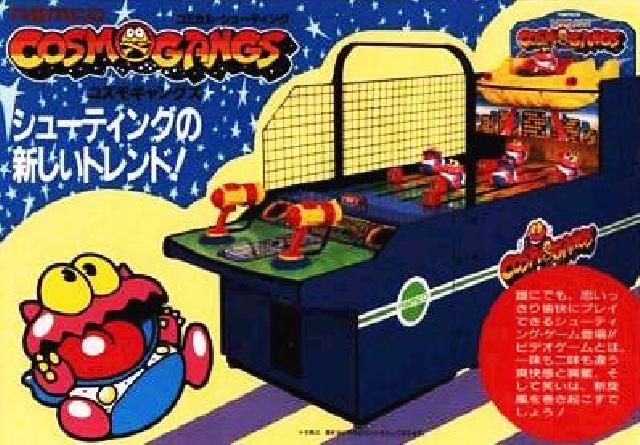
Back when there was still a arcade in every mall, I can remember one of my favorite redemption games, this tropic take on Whack-a-Mole. It was one of though staples of my early arcade memories. In my mind, all arcades had Skee-Ball, all arcades had Cyclone, and all arcades had Gator Panic. So lo and behold, I get a bit maudlin when I read the previews for the Namco Museum Remix collection and see that it includes a virtual rendition of my favorite means of alligator abuse. It was a bigger thrill than realizing that Cosmo Gang was a franchise.
Was the whole museum package a bit lackluster? Yes. Did the controls leave a bit to be desired? Yes. Was Gator Panic Remix a bit of a disappointment? Sigh. Unfortunately…
Still, I'm glad I bought it. At around $15, I get a few cherished classics (Mappy? Cutie Q? Hell's yeah.) and a short trip back to the arcades of old. Besides, this is the only way I'll get to relive those 'gator whacking days.
…Unless, of course, you know where I can buy a Gator Panic machine…

Sunday, December 28, 2008

Come All Ye Playful

As far as video games go, I think I like getting cash for Christmas. Why settle for a couple of games when I know where to get ten for the same price?
While I've been expanding my collection, I've also been discovering it. After complete Dark Cloud 2, I decided to forego Rogue Galaxy, for something a bit less engrossing. three RPGs in a row seemed a bit much. I started off with Gotcha Force, which was a surprising amount of fun. Of course, it's collection-based gameplay goes a long way in endearing itself to me. Unfortunately, I had to limited myself to merely beating the game. If the internet is to be believed, there are over 200 borgs to collect, plus rare, crystal, silver, gold and shadow versions of each one. A bet more time than I'd like to devote.
After that, I turned my attention to another little known title, Sanvein. Again, pleasantly surprised at how much fun I had. I'll definitely speak at length about what I like and don't like about the game, since most of the reviews I've seen have missed a few of the key points.
Now to find my next conquest. I still have Star Fox Assault at the top of my to-fully-complete list (getting gold medals is hard), but I still need a new game to actually try.

Tuesday, October 21, 2008

Gaming Update

The release of Tetris Party was a welcome event this Monday, given the amount of TGM I've been playing. All the new modes seemed like fun, and the prospect of online play was exciting.
Was exciting.

Turns out I suck at competitive play. My rating has been on a steady decline since I've picked up the game. Maybe I don't have the right mindset for versus, or maybe I wasn't ever that good, but my last few rounds of online Tetris action have left me a bit shy of pursuing any more matches, for awhile at least.
What I'm not shy of, though, is Art Style: CUBELLO. It's close relation to the bit Generations series was enough to merit attention, but the price point was a bit of a clincher. Simple gameplay, a clean interface and a soothing  soundtrack make for an addictive little outing. It's enough to make me consider giving ORBIENT a try.

Oh, and Dark Cloud 2 is great. It's taken a backseat to newer offers the past couple of days, but it still remains as engaging as it ever was. Should I go looking for invention ideas or rebuild this town? Will I make this weapon into a Drill Wrench or a True Battle Wrench? Should I fight with the Ridepod or transform into a monster? So many aspects of the game are fun and rewarding that I've had trouble deciding how to proceed. I can only see it getting more engaging from here.

Saturday, September 13, 2008

Warrior-Architect

Dark Cloud was hard to get into at first. Explore a dungeon level. Leave the dungeon. Restock my supplies. Go to the next level. Repeat. On occasion something more interesting would happen. I might break a weapon. Maybe I'd lose a character and half my money to foolishness. Regardless, the game was becoming less and less rewarding. Then, I started getting into the Georama mode.
In Dark Cloud, each area has a village area and a dungeon area. The village is mostly empty when you first arrive. To fill that village, you have to find Alta, which contain houses, shops, people, everything you need to rebuild.
For one, this appeals to my affinity for collection. Each level becomes a chance to expand by acquisitions rather than an aimless search for the exit. Each piece collected in turn fuels the next appeal aspect of Georama. But, rebuilding the town isn't merely about collecting all the pieces. Each resident you rescue has certain aspirations for the placement of their homes. The game essentially becomes a puzzle, making sure this home is close enough to the shop while keeping enough tree around that home, all in a limited space. For me, the end of the area comes when I've completed the town at 100%, not when I beat the dungeon boss.
It all comes full circle, though, as the more you build up the village, the more items you get for the dungeon crawl, some necessary for the progression of the story, some merely to ease the difficulty. Suddenly, I'm no longer trapped in a level-by-level grind to the end boss, but an entertaining cycle of battle and building. Now if I could just make it through a dungeon without breaking my best weapon, I might start to fully enjoy myself.

Monday, February 25, 2008

Keeping the Beat

A good run in Gungrave is all about pacing. Shooting is such an afterthought that it's a trivial affair finishing off a screen full of enemies. Of course, the real challenge comes from trying to string those screens together into a nice Beat count. This means killing them slowly, hitting the shot button deliberately instead of hammering away, keeping the last thug alive until the next one appears. This also means juggling the risk of closing in, exposing yourself to more gunfire, with the reward of keeping the combo going.

Pair this depth with my meager performance (I only got the fourth Demolition Shot at the very end of the game), and I've got more than enough reason for a second play-through before I take on Gungrave: Overdose. Luckily, it's a pretty short ride once you know what you're doing.

Friday, February 22, 2008

No More Assassins

No More Heroes is done, Gungrave is progressing, and The Dishwasher: Dead Samurai is awesome. Now, to ruminate over picking up Mass Effect again…

Monday, February 18, 2008

Back from for the Grave

Maybe I'm on an assassin kick right now, because I decided to start playing Gungrave. I intended to start playing it right after I finished watching the series, but unsurprisingly I was sidetracked by obligations and other distractions. Now I'm a month off of the final episode, mind still fresh with the enjoyment I derived from watching, and I hoping to relive some of that same enjoyment. I had played Gungrave briefly before, but this was without a real understanding of the game system, without a real drive or focus and without the appreciation for the extended, though divergent, anime.

It's fun. It's fun to keep the shot button held down, scanning from enemy to destructible object to enemy again in an effort to keep the Beat Count up and the combo going. It's fun to dive forward, to fade away, guns ablaze as they switch to fully automatic. It's fun to slowly approach my opponents, never letting up on the gunfire, only to swat them aside with my coffin (yes, my coffin). It's fun, and it looks good.

In fact, it might be the implied sense of style that's got me the most enthralled. It's a fairly simple game, but the way you can take bullets without flinching, the way you can cut through thugs with ease, the way you do most of it at the same slow, methodically stride, it all implies that you're not only good enough to kill, you're good enough to put on a show at the same time.

Gungrave and No More Heroes are a little alike in that regard, but whereas No More Heroes shows its personality through flashy swordplay and over-the-top suplexes, Gungrave does it through precision (for the most part) gunplay. If your facing anything susceptible to gunfire, you'll hit it, not because of auto-homing, but auto-targeting. Grave was one of the best assassins, and his death has done nothing to deteriorate his skills. He'll hit whatever he aims at, and his undead condition means he can do it without worrying about return fire.

Travis Touchdown, a brass, cocky sonofabitch who kills to prove whose the best. Beyond the Grave, a ghost with a purpose and a taste for revenge. Both kill with élan. Travis, with speed and brutality. Grave, with thought and thoroughness. Different edges of the same fatally beautiful blade.

No More Complaints

After a bit of hesitance from a tedious start, I'm approaching the last ranking match of No More Heroes with eager anticipation. Each new UAA member, each Assassination Gig, each new piece of clothing has led to a new reason to pick up the controller everyday. Even after the game falls into routine, each time through is, for the most part, new in some way. New enough, at least, to keep me slashing away with no regard for how close I am to making my next payment.

Of course, I can't deny that the major appeal is still the unending torrent of style the game teems down. If I'm not getting giddy over the plethora of T-shirts to be bought and found (Sniper and Pimpin' among my favorites), I'm plowing through nameless thugs with move bravado than finesse. As fun as the gameplay has gotten (with it's hidden tactics like parrying), the eye candy (more aesthetic then technical)  has gotten just as appealing.

If there's anything troubling me about the game (aside from the slowdown; think how glorious the game would look if it always ran at 60 fps), it's the prospect of playing through again on Bitter difficulty. I loved many of the more unique missions (the beginning of Bad Girl's stage, running down bad guys on the Schpel Tiger was exceptional), but doing the story all over again just to unlock everything else makes it unlikely I'll do so in the near future. I'd love to play through it again, eventually, but my irrationally need to complete will make saving the rest of No More Heroes for a later time a struggle.

Still, I'm going to enjoy upgrading my Tsubaki Mk-III, buying the last of the available T-shirts (I hope there's another one in the Bearded Sun series) and saving up for my final battle. Oh, and I hope I get to take on that punk Henry.

Wednesday, February 13, 2008

No More Tactics

Losing my DS was a slight downer, but I haven't given much thought to it. It's a bit of an inconvenience, but I've been meaning to upgrade to a Lite anyway. I'm more worried about losing my copy of Tactics Ogre, right when I was getting into the game. It's a shame so many Atlus games have low production numbers, as replacing the cart was a bit of a hassle. Two weeks and one bootleg later, I've got a replacement coming to me.

It'll be awhile 'til I get back to playing it, though. No More Heroes will see to that.

Sunday, January 20, 2008

TEAL: Propeller Arena - Earn Those Wings

Admittedly, there's not a lot to Propeller Arena. The closure of SegaNet, paired with the game's "non-release" status leaves the network option woefully impotent. Without it, the game is left with three game modes: Championship, Quick Battle and Training Arena. Since this was my first serious play-through of the game, I decided to test the waters with a little training.

Training Arena is divided into three parts, each part with a specific stage for each different character.

Propeller Stunt
The airborne firefights are quite the draw, but it's the trick system that really fascinated me on my first run of the game. Various turns and maneuvers can be executed by way of Street Fighter-like command inputs. A quarter circle here, a half circle there, all punctuated with the designated trick button (X by default). Being able to quickly pull a 180, then slide effortlessly to the left firmly places Propeller Arena in the "arcade" sub-genre, discarding realism for fast-paced action.

The Propeller Stunt portion presents you with a list of commands you must complete within a fixed time. Complete the list for a time bonus. Fail to do so, and you earn yourself a miss. Fail in completing three lists or crash, and the game is over. String together stunts one after the other nets you a combo bonus, multiplying the points earned on a trick by the number of tricks in the chain. 

In addition to a combo multiplier, you can increase the value of each trick by flying through each green ring. Do a trick with no rings under your belt and you've got the base value of 50 points, but grab a ring, and you're doing x2. It's an easy task getting through each string of commands, but, in case you can't tell, the real fun comes from going for the high score.

Propeller Stunt is probably the easiest of the Training Arena modes. Each stage can be cleared easily, even after missing some of the more difficult tricks, but it doesn't make it any less fun. What does subtract from the enjoyment is the reliability of the command inputs. I often find myself turning 180° (↓➘→➚↑ + X) when I mean to go ninety (↓➘→ + X), or decelerating (L button by default) when I mean to Air Brake (hitting the brake button quickly twice). This becomes more of a problem when you need to rely on these tricks to effectively clear some of the other training levels. Other than that, though, there's much enjoyment to be had.

Propeller Challenge
A medley of skill-based missions, Propeller Challenge can ask you to do anything from collecting icons to blowing stuff up. Some challenges asks you to participate under a different set of circumstances like flying with reversed controls or in plane-freezing weather. Suffice to say, the range of difficulty is as varied as the missions, from the pedestrian (and enjoyable) 8-bit Beat level, where you attempt to blow up a meteor, to the nerve-racking Hex Candy mission, where you have to struggle against the previously mentioned reverse controls.

I think I took a couple of tries at least for each mission, sometimes on the verge of hemorrhaging over the difficulty. Of course, that made completing the mission all the more enjoyable. If there's one thing I'm painfully aware of, it's my affinity for punishing difficulty.

Propeller Agility
The penultimate test of control mastery, Propeller Agility asks you to fly through all the rings on a given course. Missing a ring incurs a time penalty, and if your time to complete exceeds the time limit (including time penalty), you get a nice F. It takes a knowledge of some of the basic stunts and a little luck (due to the aforementioned control problems) to clear all of these. Towards the last levels, you really have to have a hold on the Lightning Dash and Air Brake stunts if you want any chance of clearing the levels. It goes a long way towards your satisfaction of clearing Level 8 knowing that it took a bit of dexerity and competence to get you there.

Three modes, twenty-four levels total, and a growing  sense of intrigue. This Propeller Arena primer has left me anticipating what Championship has to offer, but for now, I'm turning the game off. I've had enough challenge for one day.

TEAL: Propeller Arena - Prologue

Butt rock.

Back in the beginning of the Sixth Generation, back when we still compared consoles by the "bitpower" of their processors, back when journalist integrity wasn't the concern of the many internet-faring gamers, I was less discriminating of where I got my industry news from. All I needed were the previews; tidbits of information on the exciting features of imminent releases and the screenshots to corroborate them. In those days, I trekked no further than IGN.

At the time, Sony and Sega were the only factions to show up to this season of the console wars, and I had sided squarely with the Dreamcast. Two years had passed since Sonic Adventure won me over, and I was eagerly awaiting all the news I could get on every new release. Of course, there were the obvious blockbusters, but one of the things that I appreciate now in the Dreamcast is the number of unconventional games to be found on it, the same unconventionality Propeller Arena could be accused of.

Propeller Arena is an action-oriented, flight game, focusing on dogfighting and aerial tricks played out by the usual cast of diverse, over-the-top characters. I'd like to think that the reason Propeller Arena sticks in my mind was more, logically. Perhaps the prospect of online dogfighting seemed fun. Or maybe it was the amusing cast of characters and wide array of environments. Then again, I am an arcade fan. The chance at some old-fashioned arcade action could have been enough to pique my interest. Strangely, though, that's not what pops to the forefront when I recall my early excitement for the game.

The first few previews I read classified the soundtrack as belonging to a genre I hadn't come across before. 80s-esque power chords, cheese-filled lyrics, and generic riffs. The name of the game was butt rock. I don't know why the term seems to hold such fascination for me. Well, that's not true. Where others might see "butt rock" as a derogatory term, I find myself thinking, hey, I could kind of get into that. As such, the chance to partake in this game, a vessel for an unseen frontier in music, seemed to be what placed it on my wishlist. What makes it so hard to wrap my head around now is that, in reality, "butt rock" has the least to do with Propeller Arena as it presently exists. The "final" US version features more of a punk vibe than anything, licensing bands from Fat Wreck Chords. Even the AM2-produced music doesn't spring to mind visions of spandex and big hair.

I say "final" because, though Propeller Arena was pretty much gold-master, it never saw an official release. September 11 put it on the shelf for sensitivity concerns, and the death of the Dreamcast saw the game buried alongside Sega's last console. Of course, that's not gonna stop me from playing it. Like many of the other nearly-released versions of forgotten games, Propeller Arena has found a venue on the internet. It's a trivial matter to find a torrent of the US version, and the resulting disk image can be burned and played in the Dreamcast without hassle.

It might never see the limelight, but the least I can do is give it a thorough play-through. I've dabbled in the game before, usually quick bouts or training missions mostly, but I've never given it the attention this gaming anomaly deserves. I intend to rectify that, and intend for you to follow me.

Time Enough at Last

In an effort to affect more blogging and perhaps elicit more gaming in my schedule, I've decided to start a new "feature". I've had the idea for a game-centric series for quite awhile, but until recently I've had a relative full queue of game and little time to partake in them. Thanks to winter break, though, I've finished Kingdom Hearts II, gotten through Nanostray on Expert and completed Harmony of Dissonance to my current satisfaction. With those games off the table and any others too far out of my mindset to revisit (It will probably take me a week alone to relearn the patterns of Gradius V), I can start fresh on a new game, regaling anyone who will read of my virtual ventures. Funny how I timed it perfectly with the start of the spring semester, though. Perhaps this is exercise is en route to failure, but I'll try to make it an interesting ride.

It took me awhile to figure out how I'd write about these games. I knew I didn't want to really review the games the way many gaming news outlets do. I have no illusions about my own preferences. I know my tastes are eclectic and at times rather eccentric. Writing a review would seem like an arrogant endeavor; trying to convince you the merits I see in P.N.03 should be the ones you value doesn't appeal to me. Really though, at the end of the day, I'm just one of the few who can't see themselves assigning ratings, finding a place for each game on a 10-point scale. I just want to play the game, enjoy the game, and write the game.

Hopefully, Time Enough at Last will be just that; a retelling of my travels through the many digital landscapes of my DVD binder. At the very least, I might convince someone to try out Boogie Wings, which is all I can really ask for.

Thursday, November 22, 2007

Rock Band

We are Little Endian.

I was in a curious place when Rock Band rolled in to our house Monday night. Though the rest of my roommates have been talking about it all semester (especially Travis) I hadn't really gotten excited about the prospect of Guitar Hero+. Was it a general lack of interest in rocking out? Guitar Hero is a fun game with fun music, but my skills had kind of hit a plateau, and with it, I felt my enjoyment kind of peter out, as well. At the most, Rock Band would be a nice little diversion to engage in every once in a while, but not a serious gaming commitment.

Then again, it could have simply been that I didn't think I had the time for it. I've become one of those people who can spare no time for video games, and it sickens me. Whether through lack of effort (I can't be bothered to find the time) or lack of resources (there is no time), I've been left with a schedule consisting primarily of eat, sleep and school. Sure, Rock Band is fairly pick-up-and-play, but to tour with Little Endian (the Bunker's band name), you have to be committed. Maybe I thought I didn't have the time to rock.

Well, Monday night rolls around, and I wake up at midnight to the sounds of Rock Band being set up. They need a fourth member to fully enjoy the experience. I'm already up, and I can't say I'm not a little interested in how it plays/sounds, so I decide to play.

Guitar Hero's aesthetics aren't bad, but I definitely prefer Rock Band's slightly cleaner look. Still, that's all ancillary to the gameplay. Four players, all rocking out, all playing off each other are bound to have fun, especially when the multiplayer is so geared towards cooperation with Unison Bonuses, Jam Sessions, and saving fellow band members with Overdrive. You can't help but take a little pride in contributing to the performance.

So it was a nice surprise, waking up to a great game like Rock Band. Maybe I should try to forget more release dates…

Tuesday, September 11, 2007

Weewar

I don't know how behind the times I am, but I just discovered Weewar, an AJAX-driven, turn-based strategy game. It's a slightly slower pace of play, leaning closer to chess-by-mail than other, quicker competitive games, and the turn-based natural makes it easy to play on my own time, begging only a piddling 5 minutes per turn. But I guess the main thing that attracted me was the simple, pixel-based aesthetic of the game world. Either through my affinity for sprite art or my fondness of Advance Wars, the art style helps to keep my attention for longer than most web games.

If you're in on the Advance Wars/Fire Emblem style of play, I suggest going there and checking me out. And use these links, too. I want my Pro account.

Saturday, August 25, 2007

BioShock Demo

I'm glad I played this while home alone…

Gamercard

360 in the household means a gamercard in the sidebar. Check it out:


Now if only I had the time to boost that score…